Dandelion: Friend, Foe, or Overlooked Hero?
Like I always say, one man's weed is another woman's medicine. That certainly is the case for Dandelion, who pops up all over the place.
From garden to crack in the pavement, Dandelion will be there; many may find annoyance with this, deeming it an unwelcome visitor.
Yet every part of this plant has gentle, but powerful healing abilities. Dandelion has a restorative affinity with the digestive system. Supporting the removal of waste, encouraging bile production, invigorating sluggish or stagnant organs, feeding the microbiome, and so much more!
True or False?
Dandelion is a member of the daisy family (Asteraceae). This is a massive family that includes Daisy’s (of course), artichokes, chamomile, sunflowers, & more!
Though there are many different kinds of dandelion, including ‘Tohetaka’, a native variety, correct identification is important, but if you happen to mistake it for a false dandelion, you will generally be okay.
Most common lookalikes are not toxic; however, they may not offer the same nutritional or medicinal benefits as true dandelion.
(see below for examples).
Bitter is Better
If you struggle to digest heavier, fattier meals, try adding a handful of fresh Dandelion leaves to your side salad or nibbling on a leaf before your meal.
Yes, this won’t taste nice - but that's the point! The bitterness of Dandelion stimulates digestion’s initial phases by encouraging the secretion of saliva and gastric juices. Dandelion, in particular, also promotes bile release from the liver and gallbladder, aiding in the digestion of fats and the absorption of fat-soluble vitamins (A, D, E, K).
Additionally, dandelion has mild diuretic properties, helping with detoxification, reducing bloating, and supporting overall digestive health by promoting the elimination of waste.
Dandelion root is richer than most vegetables in nutrients:
Dandelion root contains high levels of a natural prebiotic fibre called inulin. Inulin passes through the small intestine undigested and is fermented by beneficial bacteria in the large intestine. This provides nourishment for helpful microbes such as Bifidobacteria and Lactobacillus (beneficial bacteria), encouraging a healthy balance of gut flora.
Through this fermentation process, short-chain fatty acids such as butyrate are produced, which help nourish the cells lining the intestines, support gut barrier integrity, and contribute to healthy immune function.
True or False? Continued:
As mentioned above, it’s important when wildcrafting (finding & harvesting medicine plants) to correctly identify the plant, make sure its in a safe environment free from spray, pollutants, run off, or antimal excriment, ask the plant for permission, give your thanks, and only take what you realistically need to ensure the plant does not become endangered, in the case of dandelion, I think you’ll be ok...
True Dandelion:
Think one flower, one hollow stem, no fuzz
For True Dandelion, the stem will be smooth, with no hairs, hollow on the inside when plucked apart, and have only one flower per stem. Don’t be alarmed by the milky white substance produced by the leaves and stem; this is latex, which is part of the plant's natural defence mechanism! The leaves grow in a rosette at ground level (all from the base), are deeply toothed, pointing back toward the centre. The flower is bright yellow & has one per stem. Example:
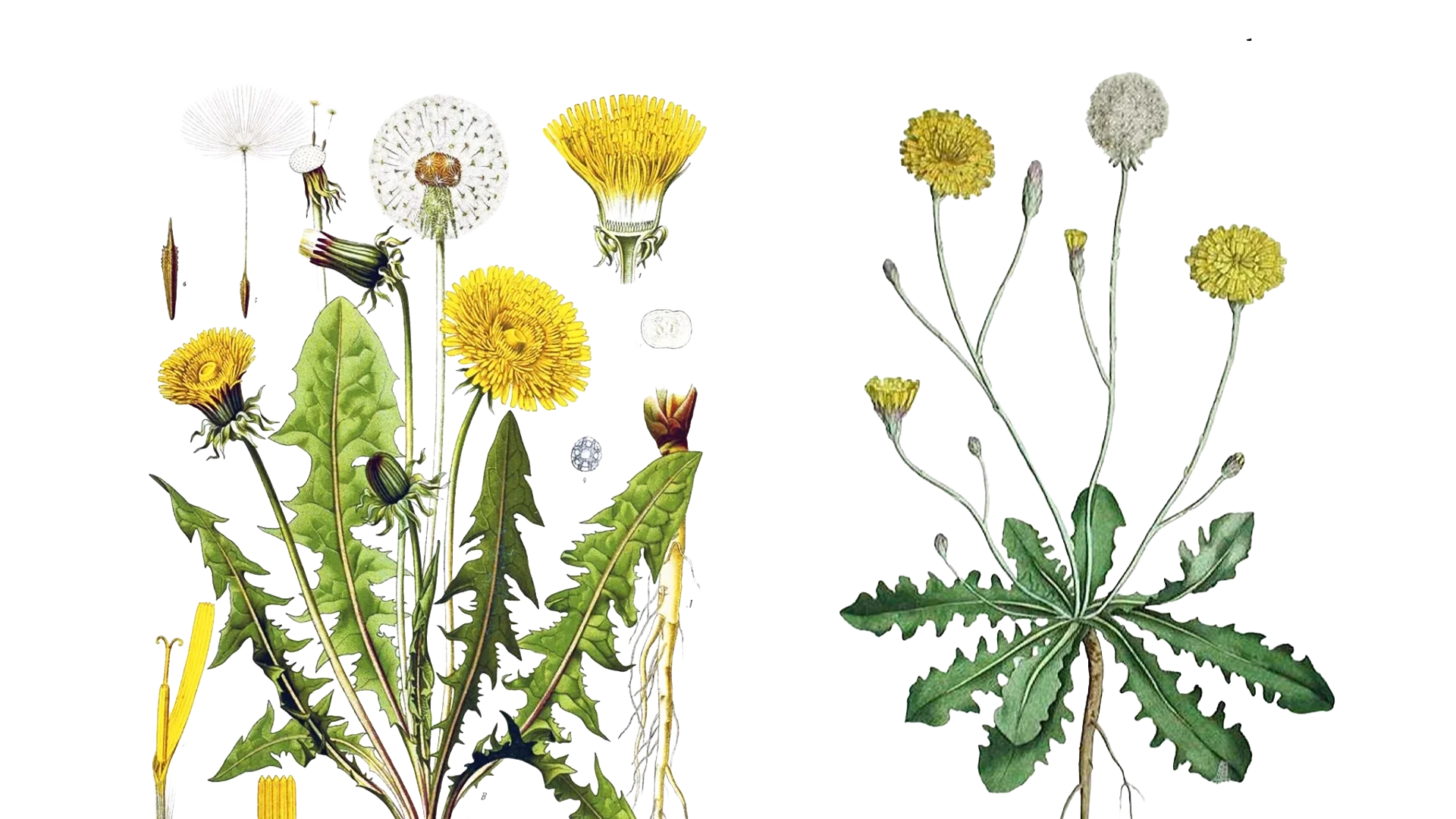
True Dandelion False Dandelion
False Dandelion:
Think branching stems, hairy, & multiple flowers.
For False Dandelion, the stem will be hairy or fuzzy. The inside stem will be solid (not hollow like true Dandelion) and branching, with multiple flowers. The leaves also form a rosette, but are often more fuzzy and sharply toothed! The flowers are still yellow but often paler, smaller, and again, found on multiple stems/branches.
Herbal Pesto With Dandelion Leaves
A herbal pesto is one of the more enjoyable ways of getting your greens in & can be made with more than basil leaves to bulk it out!
Consider dandelion leaves, a few nasturtium leaves & flowers for a bit of heat, basil, cashew nuts (cheaper than pine nuts), parmesan cheese, raw garlic, & extra virgin olive oil ~ blend & serve!